SEO / AEO
What Is Entity SEO — And Why Does It Change Everything?
For years, SEO was mostly about keywords.
Find the phrase. Put it on a page. Build backlinks. Try to rank.
That model worked because search engines were primarily matching text.
But modern search systems work differently.
Today, search engines increasingly try to understand:
- meaning
- context
- relationships
- entities
- topical relevance
Not just keywords.
That shift is exactly why Entity SEO matters.
And with AI search accelerating rapidly, it’s becoming even more important.
Key Takeaways
- Entity SEO focuses on meaning instead of keyword repetition
- Search engines now understand relationships between entities
- AI systems retrieve brands through semantic understanding
- Clear positioning improves discoverability
- Consistent entity signals strengthen topical authority
- Structured data and topical depth matter more than ever
- Modern SEO is increasingly contextual and retrieval-driven
What Is Entity SEO?
Entity SEO is the process of helping search engines and AI systems understand:
- what your brand is
- what category you belong to
- what topics you are associated with
- what expertise you consistently demonstrate
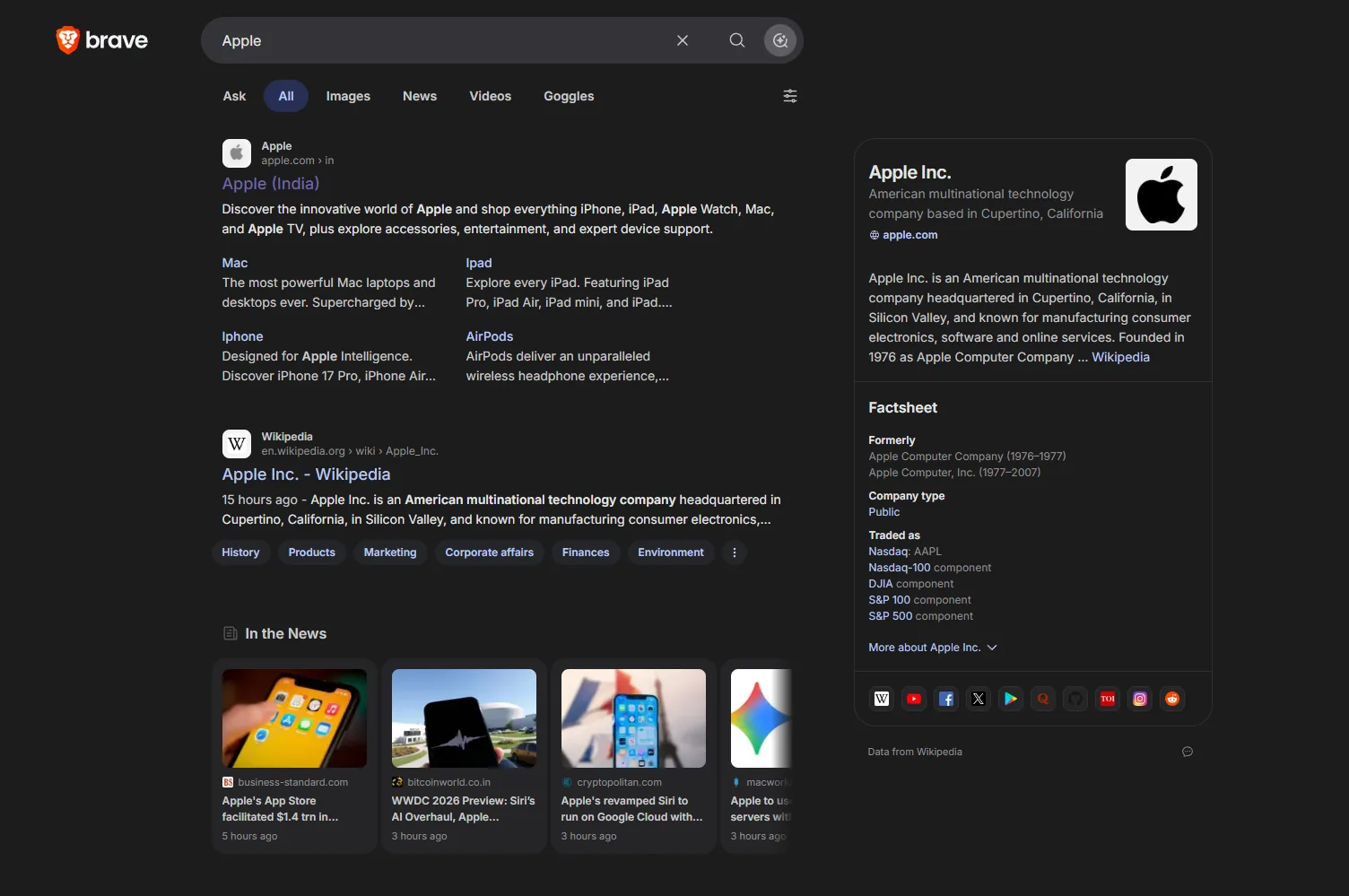
An entity is any identifiable thing a search engine can recognize.
That includes:
- companies
- people
- products
- places
- concepts
- organizations
Google no longer simply indexes pages.
It builds relationships between entities.
This changes SEO fundamentally.
Because modern visibility is increasingly about semantic understanding — not just keyword matching.
Why Traditional SEO Changed
Traditional SEO treated search like a matching problem.
If someone searched:
- “best SEO agency”
- “branding agency”
- “AI marketing”
…the objective was to match those exact phrases.
Modern search systems evaluate much more than that.
They increasingly analyze:
- contextual relevance
- topical authority
- semantic consistency
- intent alignment
- entity relationships
That changes how rankings work.
A page can repeat a keyword dozens of times and still remain semantically weak.
Meanwhile, another website with:
- clearer positioning
- stronger topical depth
- better contextual signals
…can outperform it without excessive keyword repetition.
Because search engines increasingly care about understanding — not just matching.
Search Engines Now Understand Meaning
Think about the word:
“Apple.”
Does it mean:
- the company
- the fruit
- the stock
- the record label
A keyword alone cannot solve that ambiguity.
An entity does.
Search engines use relationships and contextual signals to determine meaning.
That’s what semantic search systems are designed to do.
And AI discovery systems push this even further.
Why AI Search Makes Entity SEO More Important
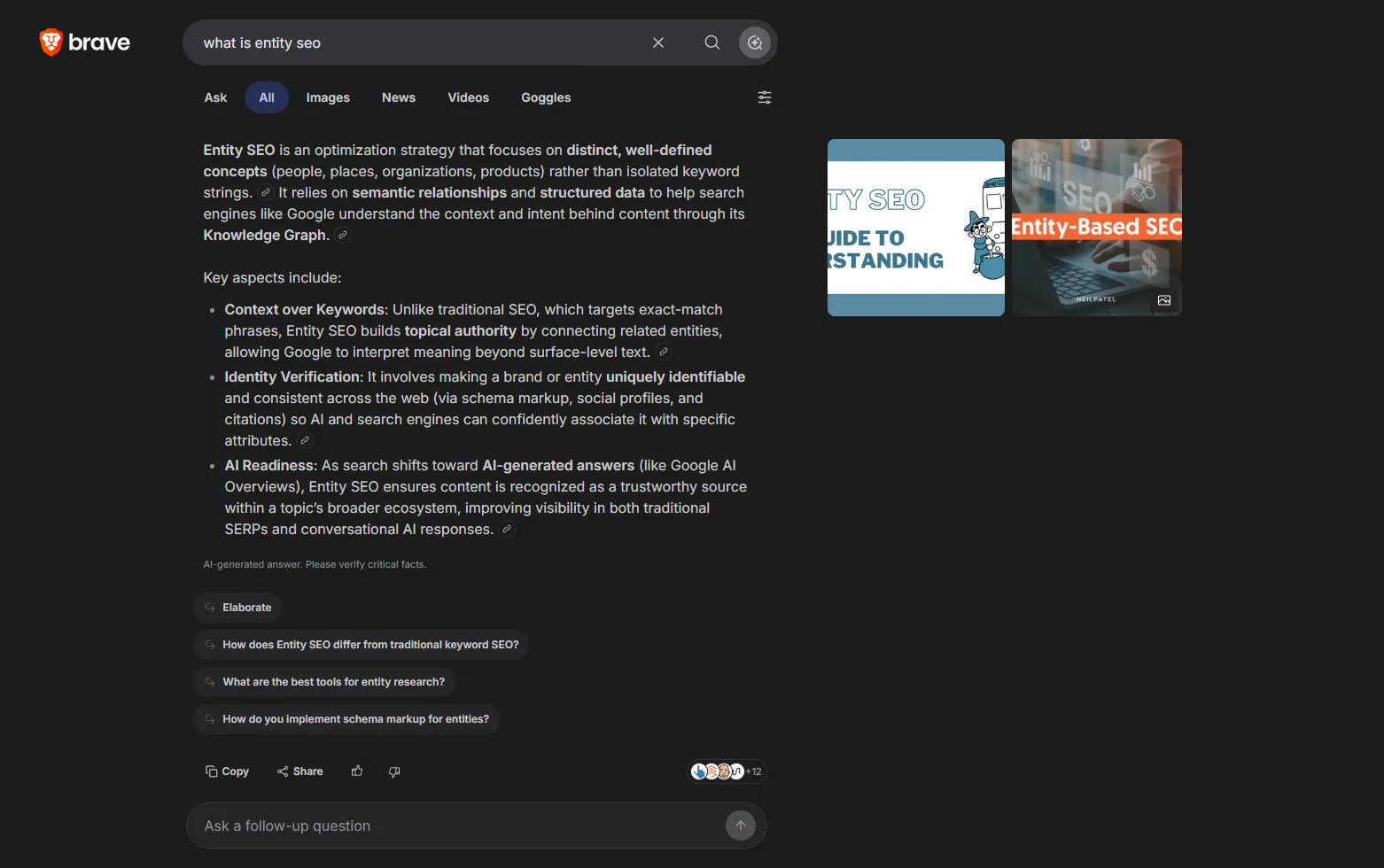
AI systems retrieve information differently from traditional search engines.
When someone asks ChatGPT:
“What’s a good branding agency for modern consumer brands?”
…the system is not simply ranking pages based on keyword density.
It retrieves based on:
- semantic relevance
- contextual confidence
- topical authority
- entity relationships
- information structure
- retrievability
This is a major shift.
While testing prompts across systems like ChatGPT and Perplexity, a recurring pattern became obvious:
Brands with:
- clear positioning
- strong topical consistency
- obvious expertise signals
…surfaced far more reliably.
The weakest-performing brands were usually vague.
Not necessarily low-quality.
Just difficult for machines to interpret confidently.
That distinction matters.
Because AI systems reward clarity.
This shift is closely connected to the rise of Generative Engine Optimization (GEO), where brands increasingly need to optimize for retrieval, summarization, and AI-generated discovery.
Read: What Is Generative Engine Optimization (GEO)?
Most Brand Positioning Is Semantically Weak
A surprising number of websites are optimized for aesthetics before comprehension.
The visual branding is strong.
The copy is polished.
But structurally, the positioning is extremely difficult to categorize.
For example:
“Helping ambitious brands unlock transformative growth.”
That sounds impressive.
But it creates weak semantic signals.
Now compare it to:
“Performance marketing for DTC skincare brands.”
The second example immediately creates:
- category clarity
- contextual specificity
- stronger topical association
- higher retrieval confidence
Specificity has become a competitive advantage.
Especially inside AI-native discovery systems.
How Entity SEO Actually Works
At its core, Entity SEO reduces ambiguity.
It helps search engines understand:
- what your business does
- who you serve
- what topics you own
- how you relate to other entities online
The clearer those relationships become, the easier retrieval becomes.
This applies across:
- Google Search
- AI Overviews
- ChatGPT
- Perplexity
- semantic retrieval systems
This is no longer just about ranking pages.
It’s about becoming contextually understood.
The Four Pillars Of Entity SEO
1. Clear Positioning
Your positioning should be understandable immediately.
One issue that repeatedly appears during audits is inconsistent categorization across pages.
A company may describe itself differently on:
- the homepage
- service pages
- metadata
- external mentions
That fragmentation weakens semantic understanding.
Strong brands maintain consistent entity signals everywhere.
2. Topical Authority
Authority compounds through clusters — not isolated articles.
If your website consistently publishes around:
- Entity SEO
- semantic search
- AI discovery
- GEO
- retrieval systems
- discoverability infrastructure
…search engines begin associating your entity with those concepts over time.
This is how topical authority compounds structurally.
3. Structured Signals
Entity SEO is partly content strategy.
But it’s also infrastructure.
Structured data matters.
Schema markup matters.
Internal linking matters.
Metadata matters.
Heading hierarchy matters.
These systems help machines interpret relationships faster and more accurately.
Many brands underestimate how much weak information architecture damages discoverability.
4. External Entity Relationships
Search engines also evaluate relationships beyond your website.
That includes:
- backlinks
- founder visibility
- citations
- podcasts
- LinkedIn presence
- PR mentions
- creator ecosystems
The stronger and more consistent these relationships become, the stronger your semantic authority becomes.
Entity SEO is not only about what your website says.
It’s also about what the broader web consistently associates you with.
How To Improve Entity SEO
Clarify Your Positioning
Avoid vague marketing language.
Describe:
- what you do
- who you serve
- what category you belong to
Clearly.
Specificity improves retrieval confidence.
Build Topical Clusters
One article does not create authority.
Clusters do.
Publishing consistently around related concepts creates stronger semantic relationships over time.
Improve Internal Linking
Internal links help search engines understand:
- topical relationships
- content hierarchy
- semantic structure
Strong internal linking strengthens entity association.
Use Structured Data
Schema markup helps machines interpret:
- organizations
- articles
- products
- authors
- services
Faster and more accurately.
Strengthen External Signals
Mentions across trusted platforms reinforce entity understanding.
That includes:
- backlinks
- creator mentions
- podcasts
- founder visibility
- citations
- social profiles
The broader your semantic footprint becomes, the stronger your discoverability becomes.
Why Most Brands Still Struggle
Most companies still approach SEO tactically.
They focus on:
- publishing volume
- trend chasing
- keyword density
- short-term ranking spikes
The result is usually semantic chaos.
Disconnected articles.
Weak topical relationships.
No consistent authority structure.
They publish content.
But they never build semantic infrastructure.
One of the clearest symptoms of weak semantic positioning is when AI systems struggle to explain what a company actually does.
This is becoming increasingly common as vague marketing language collides with retrieval-based discovery systems.
Read: If an AI Can't Explain What You Do, You've Already Lost the Room
Search Is Becoming Semantic
This is the larger shift many companies still underestimate.
Search engines increasingly try to understand:
- concepts
- entities
- contextual meaning
- relationships
- topical association
Not just pages.
AI systems accelerate this shift even further because retrieval models rely heavily on semantic understanding.
That means the future of SEO is increasingly:
- semantic
- contextual
- retrieval-driven
- entity-based
- machine-readable
The Strategic Reality
The companies that win over the next decade probably won’t be the companies publishing the most content.
They’ll be the companies that are:
- easiest to understand
- easiest to categorize
- easiest to retrieve
- easiest to associate with expertise
That’s the real purpose of Entity SEO.
Not gaming algorithms.
Building semantic clarity at scale.